

This is Part 1 of a two-part series on my Core Identity Model for Chiropractors.
Your Core Identity is the foundation of long-term success in practice—it aligns who you are with how you perform, creating clarity, resilience, and purpose-driven growth.
Part 1 explores the Inner Nucleus: the deep structures that define who you are.
Part 2 explores the Outer Shell: the high-performance habits that turn your identity into consistent action.
Why Your Identity Must Come Before Strategy
Most chiropractors I meet are chasing the next breakthrough—the perfect Facebook ad campaign, the “magic” script that always converts patients, the CRM system that will transform their practice.
But here’s what I’ve learned after 20 plus years in Chiropractic: all of that is just surface-level noise.
Don’t get me wrong—tactics matter. But they’re like the branches of a tree: visible, attention-grabbing, yet completely dependent on what lies beneath the surface for their strength.
What truly sustains a thriving practice over decades isn’t found in any marketing course or practice management system.
It’s your Core Identity.
The ADIO Coaching Core Identity Model
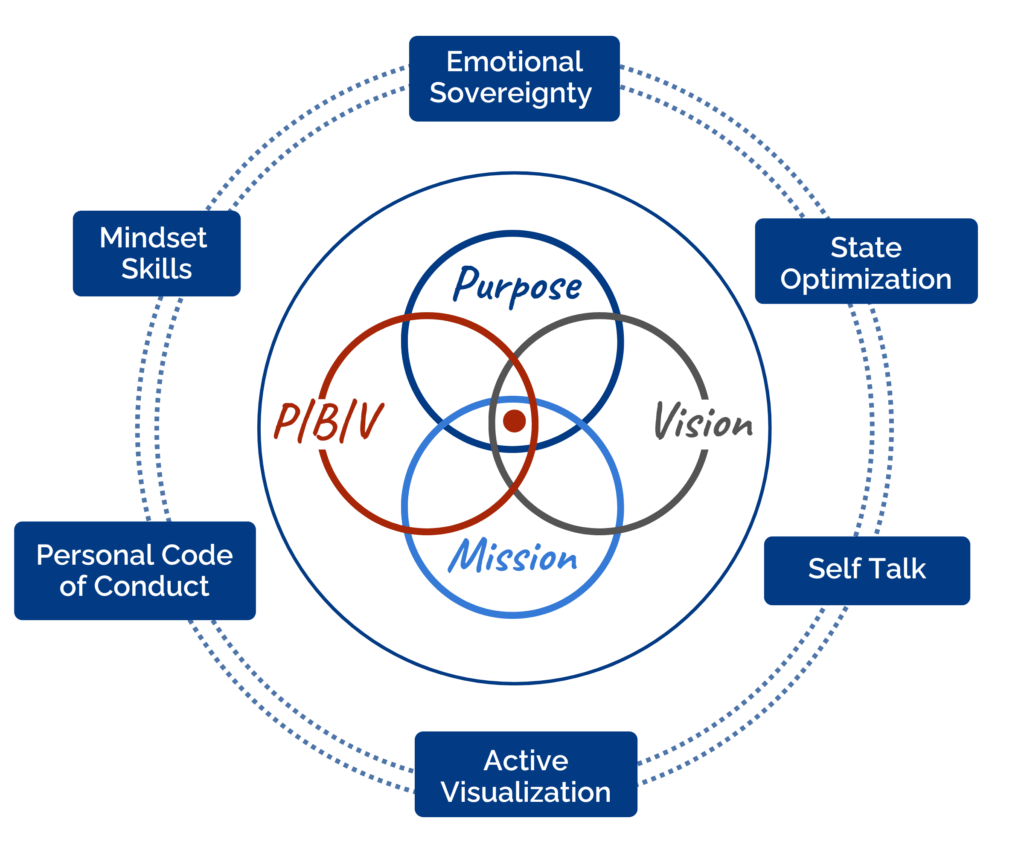
The Core Identity Model: Your Inner Nucleus (center) provides the foundation for your Outer Shell tools and behaviors.
And at the very center of your Core Identity lies what I call the Inner Nucleus—the deep architecture of who you are, not just what you do.
The Foundation That Powers Everything
Your Inner Nucleus is the gravitational center of your professional life. It’s what anchors you when challenges arise, fuels your resilience during tough seasons, and inspires genuine trust from both your team and your patients.
When your Inner Nucleus is strong, you serve from a place of deep congruence—where your values, vision, and actions are perfectly aligned. Patients feel it. Your team sees it. And you experience the profound satisfaction that comes from building something meaningful.
Without this foundation? Your practice will always feel like it’s built on shifting sand, no matter how many new tactics you implement.
With it, you become rooted—and roots are what allow branches to flourish.
The Four Elements That Define You
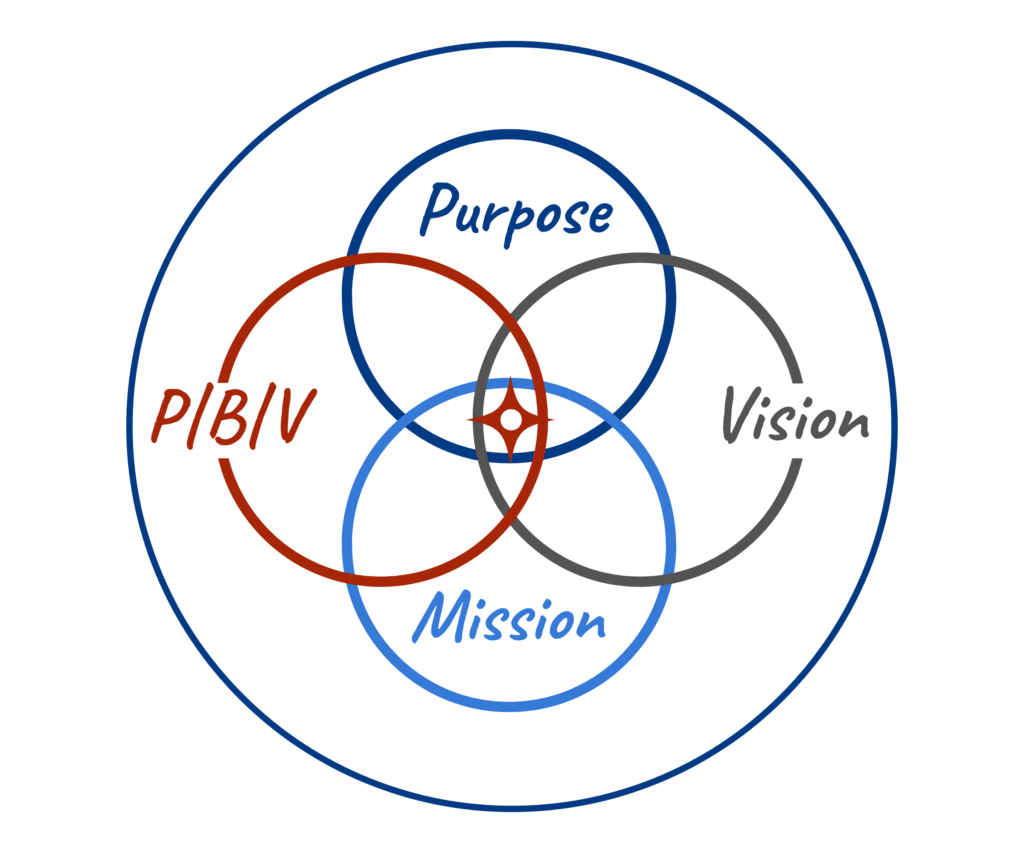
Your Inner Nucleus consists of four interconnected elements that work together to create unshakeable professional identity:
- Purpose
- Principles, Beliefs, and Values in practice (P/B/V in the diagram)
- Strategic Vision
- Your Team’s Shared Mission
Let’s explore each one.
1. Purpose: Your Reason for Existing
Your Purpose is the “why” behind everything you do. It’s the original calling that drew you to chiropractic—the cause or contribution that gives meaning to your daily efforts.
Here’s what I’ve discovered: Purpose is never about profits or prestige. For the most successful chiropractors, it’s always about impact.
For example, your purpose might sound like:
“To help families live healthier, more vibrant lives.”
“To restore hope and vitality where others have given up.”
“To empower people to trust their own innate potential.”
When your purpose is crystal clear, it becomes your energy source. Decision-making gets easier. The motivation to push through inevitable challenges becomes automatic.
Try This: Complete this sentence: “The reason I do what I do is…”
Keep refining it until reading it lights something up inside you.
2. Principles, Beliefs, and Values: Your Internal Compass
If purpose is your “why,” your Principles, Beliefs, and Values (P/B/V) are your guardrails– they directly guide your behaviors and actions.
- Principles are universal truths you stand on. (e.g. “The body is self-healing when interference is removed.”)
- Beliefs are the convictions you hold about people, health, and the world.
- Values are the priorities that shape your behavior. When you determine that this is more important than that, you are expressing your values.
When challenges arise—a difficult patient interaction, a tough business decision, a tempting shortcut—your Principles, Beliefs, and Values system determines how you respond. They keep you aligned with your purpose even when it’s uncomfortable.
The most successful chiropractors I work with consistently hold these four non-negotiables:
- Integrity (doing what’s right and honoring your word, even when no one is watching)
- Personal responsibility (internal locus of control)
- Growth mindset (embracing challenges as opportunities to learn and grow)
- Optimism (believing in positive outcomes)
These qualities shape the culture of your practice and the experience of everyone you serve.
Try This: Identify your top five core values and write one sentence describing what each means to you in practice. This becomes your personal code of conduct.
Try This: Identify your top five core values and write one sentence describing what each means to you in practice.
This becomes your personal Core Value Statement.
3. Strategic Vision: Seeing the Future With Clarity
Your Strategic Vision is your ability to clearly define what success means to you — not just in the next year, but over the next 10 or 20.
Chiropractic teams that sustain success over decades have extreme clarity about where they’re headed, what they’re building, and why it matters.
This isn’t a vague wish list or generic goal-setting exercise. It’s a strategic projection of the specific future you want to create.
Your vision should answer:
- What will my ideal practice look and feel like?
- What kind of impact will I be known for?
- What will my team culture be like?
- How do I want to feel about my work?
- What do I want patients to say about their experience with me?
A clear vision creates a powerful pull. It transforms long-term dreams into present-day priorities and helps you reverse-engineer your strategy from your desired future rather than your current circumstances.
4. Mission: Turning Your Purpose In Action
Mission is where your purpose and vision become operational—the bridge between your “why” and your measurable results.
While purpose is timeless and vision is long-term, your mission is present-tense, quantifiable, and actionable.
An effective Mission Statement needs three components:
- Three measurable objectives that drive the financial health of your practice
- A specific deadline for achievement
- A compelling reason why this mission matters
Use this formula:
“We will achieve X (3 measurable objectives) by Y (deadline) because of Z (why it matters).”
Your mission gives your team’s daily efforts focus and direction. It should be reviewed regularly in meetings and serve as your North Star for quarterly planning.
Try This: Draft a mission statement using the formula above—something you could confidently share in your next team meeting.
Draft a mission statement using the formula above—something you could confidently share in your next team meeting
Why the Inner Nucleus Comes First
When you invest time clarifying your Inner Nucleus, everything else accelerates.
You gain:
- Alignment– Your decisions become consistent and values-driven
- Resilience– You stay grounded when inevitable setbacks hit
- Authenticity– Patients and team members know they can trust you
- Clarity– Your strategic plans have a true north to guide them
This is why your Inner Nucleus operates at the level of being—it shapes who you are as a leader, healer, and human being.
Once this foundation is solid, all the external tools and tactics have something real to anchor to, just as strong roots allow branches to grow wide and high without breaking.
What’s Next?
In my next article, we’ll explore the Outer Shell of the Core Identity model—where your identity gets embodied through specific actions and high-performance habits.
But remember: those tools will only create lasting impact when they’re powered by a strong Inner Nucleus.
Your roots must come before your branches.
Ready to clarify your Strategic Vision?
Download my free Vision to Victory workbook—a step-by-step guide to crystallizing your ideal future and turning it into an actionable roadmap.
Download Your FREE Workbook Here!